


Many EV drivers worry about how and when to charge their vehicles. If you’ve ever wondered whether AC charging is the right choice for your routine, you’re not alone.
Use AC charging when you can park your EV for several hours, like at home or work. It’s cost-effective, safe, and better for your battery over time.
AC charging is most useful in your daily life. If you usually charge your EV overnight, during work hours, or while shopping, then AC charging is exactly what you need. It may not be the fastest method, but it’s the most reliable for regular use. Here’s why:
Can you use AC while charging EV?
It’s easy to confuse AC power with your vehicle’s air conditioning system. But this question is about whether AC power can be used for charging.
Yes, you can and should use AC power for charging your EV, especially when you have time to let the car charge slowly and safely.
AC chargers are everywhere. You’ll find them in homes, parking garages, shopping malls, and offices. These chargers send alternating current (AC) to the car, which then gets converted to direct current (DC) by the car’s onboard charger. This slower conversion process is easier on your battery and helps with long-term health. It’s also cheaper to install and maintain than high-speed DC chargers.
Is AC charging good for EV?
Charging options can affect your battery health and overall vehicle performance. So, is AC charging a better option?
Yes, AC charging is good for your EV because it reduces battery stress and supports regular, safe charging patterns.
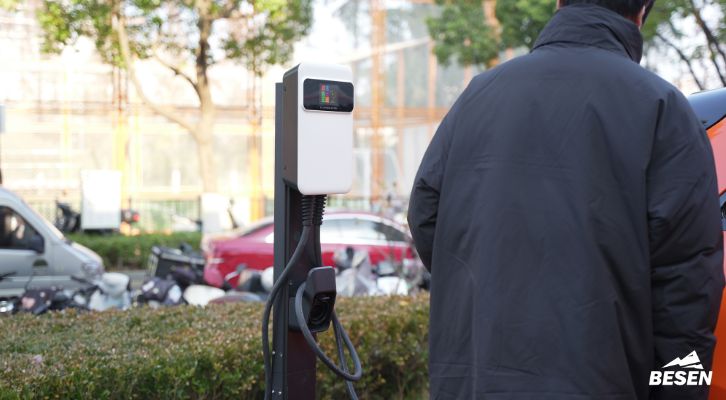
Unlike DC fast charging, which pushes large amounts of energy quickly, AC charging allows a steady and balanced power flow. This is better for battery longevity. The slower pace lets the vehicle manage heat more effectively. That’s why many manufacturers recommend using AC charging as your primary method. It’s not just about cost—it’s about keeping your EV battery strong over time.
Why do EVs use both AC and DC current?
EVs seem complex, especially when you learn they work with both AC and DC. But there’s a simple reason behind this.
EVs use AC from the grid and convert it to DC internally because batteries can only store DC, while fast chargers supply DC directly to charge faster.
Let’s break this down. The power in your home or most public charging stations is AC. Your EV, however, stores energy as DC. That’s why AC charging stations need the onboard converter in your car. DC chargers skip this step. They do the conversion before sending energy to the car, which is why they charge so much faster. Both methods are needed: AC for regular use and DC for long trips when speed matters.
| Power Type | Where It’s Used | Speed | Typical Use Case |
|---|---|---|---|
| AC | Homes, workplaces | Slow (3-22kW) | Daily charging |
| DC | Highways, fast stations | Fast (50kW+) | Long-distance travel |
Does using AC charging in electric car drain battery?
Some EV owners worry that AC charging might cause slow power leaks or inefficiencies.
No, using AC charging does not drain your EV battery—it charges it slowly and steadily without stress.
In fact, AC charging is safer for your battery. It does not overheat the cells 1 or cause extreme current flows. When plugged into an AC charger, your EV manages how much power it needs. It draws energy at a consistent rate, stopping once it reaches full charge. There’s no drain happening—only controlled charging 2. So, leaving your car on AC charge overnight is completely safe.
How does AC charging work on EV?
Understanding how AC power charges an EV helps you make better choices as a driver.
AC charging works by sending alternating current to the EV’s onboard charger, which converts it to direct current to store in the battery.

When you connect to an AC charger, the energy first flows into the onboard charger inside your EV. This device is responsible for converting AC into the kind of electricity the battery can store—DC. Because of this internal step, the speed of AC charging depends on your vehicle’s onboard charger capacity. Some vehicles can take 7 kW, others up to 22 kW. It’s this internal setup that determines how fast your car can charge from an AC outlet.
How much does AC drain an EV battery?
Another common concern is whether AC use inside the car, like air conditioning, affects your battery during charging.
Running the car’s AC during charging uses a small amount of energy, but it does not significantly drain the battery or slow the charging process.
If you sit in your car while it charges, using the air conditioning 3 won’t stop the charging process 4. However, it does draw some energy from the power source. Your EV will manage power between charging the battery and keeping you comfortable. But unless you’re in extreme heat or cold for many hours, the energy used 5 is minimal. This effect is much more noticeable during driving than charging.
How does AC charging compare to DC charging in terms of efficiency?
Not all charging is equal. While DC is fast, is it always better in terms of energy use?
DC charging is faster, but AC charging is more efficient for routine use because it generates less heat and requires less cooling.
DC chargers need strong cooling systems and consume more energy during operation. AC charging, being slower and more stable, doesn’t require such intense heat management. Over time, this means less wasted energy. Also, using DC often can speed up battery degradation6 due to heat and high current. That’s why most manufacturers suggest using AC for daily charging and keeping DC for emergencies or road trips.
Can using AC charging affect the lifespan of an electric vehicle’s battery?
Your EV’s battery is the most important part. Taking care of it should be a top priority.
Yes, using AC charging regularly can extend your EV battery’s lifespan by reducing heat and stress during charging.
Frequent fast charging heats the battery and adds strain. In contrast, AC charging uses lower power levels, which results in slower but healthier charging cycles. This keeps battery temperatures lower, reduces internal wear, and maintains capacity over a longer period. If you want your EV battery to last for many years, using AC charging whenever possible is the best choice.
Conclusion
Use AC EV charging for daily routines—it’s safe, cost-effective, and better for battery health over the long run.
READ ON:
The Advantages And Challenges Of AC EV Charging Stations
Ultimate Guide to Different EV Charging Types
What are EV Charging Connector Types?
What is a Type 2 charging cable for electric cars?
- Understanding the impact of overheating on battery life can help you maintain your EV’s performance and longevity.[↩]
- Learn about controlled charging and its benefits for battery health and efficiency, ensuring your EV remains in top condition.[↩]
- Understanding the impact of air conditioning on EV charging can help you optimize energy use and comfort during your drive.[↩]
- Learn about the EV charging process to better understand how to manage your vehicle’s energy consumption effectively.[↩]
- Explore how much energy is consumed by air conditioning in EVs to make informed decisions about comfort and efficiency.[↩]
- Learning about battery degradation can help you extend the life of your electric vehicle’s battery and optimize charging practices.[↩]

