


When you’re watching your EV charge and notice the speed crawling after 80%, it’s not a glitch—it’s on purpose. This slowdown protects your battery. Charging a battery all the way to the top too quickly can cause damage over time, so manufacturers slow things down near the end to preserve performance and lifespan. It’s like topping off a glass of water—too fast at the end, and you risk overflow.
EV charging slows after 80% to protect the battery from heat and stress, which increases at higher states of charge. This helps preserve battery health and extend its lifespan. Slowing the charge rate reduces wear and overheating that typically occurs when pushing energy into a nearly full battery.

It might feel frustrating when you’re in a rush and waiting for those last few percent. But this design keeps your battery healthier for longer. Unless you really need a full charge, stopping at 80% can save you time—and headaches later.
Why Does the Charge from 80–100% Take Almost A Full Cycle?
Ever waited 20 minutes to get from 20% to 80%, then another 30 minutes just to crawl up to 100%? That’s by design, not poor performance. As your battery fills up, the system works harder to prevent overheating and damage, which slows things down a lot.
The final 20% of an EV battery charges slowly because charging generates more heat as the battery fills, and slowing the process protects its internal structure. The system lowers the current to manage this safely. It’s much like braking as you approach a stop—you ease in instead of slamming on the brakes.
When a lithium-ion battery 1 nears its full capacity, it can’t absorb power as quickly. Fast charging all the way to 100% would build up excess heat and strain the battery’s chemical components. So EVs reduce the charging speed to a trickle as they approach full. This final stage is sometimes called the “taper phase 2.” It’s slower, but it keeps your battery safe.
Here’s a simplified view of charging phases:
| Charging Stage | Charge Level | Charging Speed | Reason |
| Bulk | 0–50% | Fast | Battery absorbs power easily |
| Mid | 50–80% | Moderate | Some thermal management needed |
| Taper | 80–100% | Slow | Prevent heat and degradation |
Is It Okay to Charge EV to 100% Occasionally?
Sometimes you just need that full range, especially on road trips. You might wonder if charging to 100% once in a while will mess up your battery. The answer is no—as long as you don’t do it all the time.
Yes, it’s okay to fully charge your EV on occasion, especially for long trips. Doing this from time to time won’t harm your battery. The key is not to keep it at 100% for extended periods, as high charge levels cause more stress and wear on the battery.
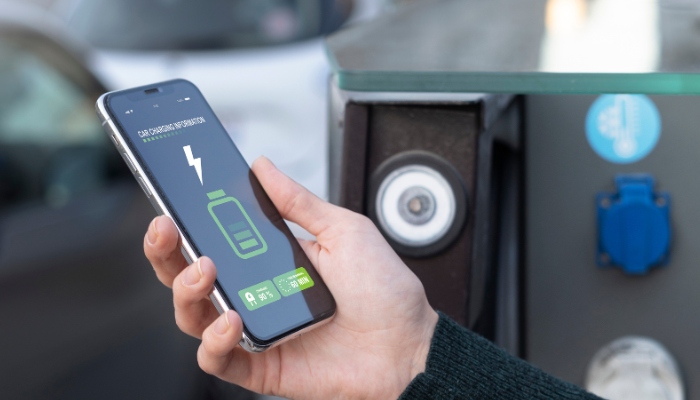
Lithium-ion batteries 3, like the ones in EVs, are sensitive to how full they are. Keeping them near 100% too often accelerates chemical reactions inside the battery that reduce its capacity over time. But using a full charge 4. This link provides valuable information.)) now and then won’t make much of a dent. Just try to avoid leaving it at 100% overnight or when you don’t plan to drive soon after.
Why Does Optimized Charging Stop at 80%?
Most EVs have a recommended charging limit—often around 80%—and some even call it “optimized” or “balanced” charging. Why 80%? Because this is the sweet spot between usable range and long-term health.
Optimized charging stops at 80% because this level balances EV battery longevity with everyday driving needs. Charging beyond 80% more frequently increases battery degradation. Most people don’t need more than 80% for daily use, so it’s a smart default setting.
Charging beyond 80% doesn’t give you double the benefit—it gives you diminishing returns 5. You get more wear on the battery, more heat, and only a little more range. That’s why many EVs let you set a max charge level 6 and even schedule it. By defaulting to 80%, you maintain a rhythm of charging that fits most lifestyles without putting unnecessary stress on the battery.
What is the Lifespan of EV Battery?
With all this talk about protecting the battery, how long does one actually last? The good news is that today’s EV batteries are built to go the distance—often more than most people will drive in a decade.
Most EV batteries last between 8 to 15 years or 100,000 to 300,000 miles, depending on driving habits, climate, and charging practices. With good care, such as avoiding full charges daily, battery lifespan can be extended significantly.
Battery health depends on temperature, charge level, and cycles (how often you charge and discharge). Keeping the battery cool, charging to 80% for daily use, and avoiding deep discharges can all help extend its life. Many manufacturers even offer warranties up to 8 years or 100,000 miles, showing how confident they are in the technology.
Is It OK to Stop Charging at 80%?
You might wonder if you’re doing something wrong by not “filling up” every time. Turns out, stopping at 80% 7 might be the smartest move you can make.
Yes, stopping at 80% is not just okay—it’s ideal for everyday use. It reduces battery wear 8, prevents overheating, and still gives you enough range for most trips.

You don’t fill your gas car to the brim just to drive to the corner store, right? Same logic here. Unless you need the extra miles, charging to 80% keeps your battery in the healthiest state. And if your EV lets you schedule or cap your charge, it’s smart to take advantage of that.
What Are the Best EV Charging Practices for Battery Life?
So how should you charge your EV day-to-day if you want to keep that battery happy? There are a few simple habits that can go a long way.
The best EV charging practices 9 include charging between 20–80%, avoiding frequent full charges, using scheduled charging to avoid heat, and minimizing fast charging when possible. Keeping your battery cool and stable helps maintain its capacity over time.
Here’s a quick guide to follow:
| Best Practice | Why It Helps |
| Keep charge between 20–80% | Avoids stress on battery |
| Charge slowly when possible | Reduces heat buildup |
| Use scheduled charging | Keeps battery cool and avoids peak load |
| Limit fast charging | Reduces thermal stress |
| Avoid leaving at 100% | Minimizes long-term voltage strain |
By following these habits, you get the best of both worlds—great performance today and long-term battery health.
Conclusion
EVs slow down charging after 80% to protect the battery and extend its life. Charging fully is fine once in a while, but for daily driving, 80% is the smarter, safer choice. With just a few good habits, you can keep your EV battery healthy for years to come.
READ ON:
Can You Charge An EV Overnight?
Explore One Stop EV Charging Solutions At EVS36
EV Charging Time: How Long Does it Take to Charge an Electric Car?
How To Source Suitable EV Charging Cable?
- Exploring how lithium-ion batteries function can enhance your knowledge of EV technology and battery management.[↩]
- Understanding the taper phase is crucial for optimizing battery health and charging efficiency in electric vehicles.[↩]
- Understanding Lithium-ion batteries is crucial for optimizing EV performance and longevity.[↩]
- Learn about the implications of keeping your EV battery at full charge and how it affects battery health ((Exploring battery health can help you maximize your EV’s efficiency and lifespan.[↩]
- Discover the concept of diminishing returns in EV charging to make informed decisions about your charging habits.[↩]
- Learning about max charge levels can enhance your EV’s performance and battery longevity.[↩]
- Explore the benefits of stopping at 80% charge for EVs to enhance battery life and performance.[↩]
- Learn how reducing battery wear can significantly extend the lifespan of your electric vehicle’s battery.[↩]
- Understanding the best EV charging practices can significantly enhance your battery’s longevity and performance. Explore this link for expert insights.[↩]

