


If you’ve just entered the world of EVs, you’ve probably seen both “Type 2” and “CCS” on charging stations, in manuals, and in online discussions. At first glance, they seem identical. But treating them as the same could lead to charging issues you didn’t expect.
No, Type 2 and CCS are not the same. Type 2 is an AC-only charging connector. CCS—specifically CCS2 in Europe—is an enhanced version of Type 2 that adds two extra pins for DC fast charging. This makes CCS2 more versatile, as it supports both regular AC charging and high-speed DC charging. Type 2 supports AC only.

This small but important distinction affects where, how, and how fast you can charge. Knowing the difference helps you avoid wasting time at incompatible stations.
Does Type 2 Work in CCS?
This one causes a lot of confusion. The plugs look similar, so it’s easy to think they’re interchangeable. But does that actually work in real life?
Yes, a Type 2 plug works in a CCS2 socket for AC charging. CCS2 ports are designed to accept standard Type 2 plugs. But the opposite doesn’t work—you can’t plug a CCS connector into a Type 2-only port, especially for DC charging.
This backward compatibility is by design. It lets older EVs still use modern charging infrastructure 1—just not at high speeds.
Is Tesla Type 2 or CCS?
Tesla’s charging standard often confuses people, especially since it varies across regions. So what’s the situation in Europe?
In Europe, older Tesla models used the Type 2 connector for both AC and DC charging. But newer Teslas, like the Model 3 and Model Y, now use CCS2. This change lets them access fast-charging networks beyond Tesla Superchargers.
Tesla’s move to CCS2 aligns with European charging standards and opens the door to third-party chargers. It’s now the default for new Tesla models across Europe.
Can You Convert CCS to Type 2?
It would be handy if you could just use an adapter and make everything work. But is that possible?
No, you can’t convert CCS to Type 2 for DC charging. Type 2 can’t handle DC charging at all. It lacks the extra DC pins and the electrical systems needed to use fast DC power. So no adapter can make that happen.
Even if a physical adapter fit, your car still wouldn’t know how to manage the fast-charging power from a CCS source.
Is Type 2 the Same as CCS Tesla Model 3 Uses?
The Tesla Model 3 looks like it uses a Type 2 plug, so it’s a fair question to ask. Is it really the same?
The European Tesla Model 3 uses a CCS2 port. The top half looks like a Type 2 plug, but it also includes two extra pins for DC charging. So, it’s actually a CCS connector with Type 2 compatibility built in.
This design gives the Model 3 flexibility. You can charge slowly at home 2 using AC, or hit a high-speed charger when you’re on the go.
What About Type 2 to CCS Adapters?
There are a lot of EV adapters out there. Some even claim to convert Type 2 to CCS. Should you trust them?
Type 2 to CCS adapters exist, but they only work with vehicles that are already CCS-compatible. These adapters do not convert a Type 2-only vehicle into one that supports CCS. They simply change the plug shape, not the internal charging tech.
Tesla offers a CCS adapter for older models, but only if the car has been retrofitted to support CCS. Without that, an adapter won’t work.
CCS Charger vs Type 2: Which Is Faster?
If you need to get back on the road quickly, the charging speed really matters. Which one is faster?
CCS chargers are much faster than Type 2. Type 2 is limited to AC speeds—usually up to 22 kW. CCS2 chargers deliver DC power directly and can go up to 350 kW at ultra-fast stations.
Speed Comparison Table
| Charging Type | Max Power (kW) | Charging Time (0–80%) | Use Case |
| Type 2 (AC) | 3.6–22 | 4–8 hours | Home or slow public AC |
| CCS2 (DC) | 50–350 | 20–40 minutes | Highway, fast public DC |
This is why CCS2 is the better option for road trips and emergency charging. Type 2 is fine for overnight top-ups.
CCS2 vs Type 2: What’s the Real Difference?
They look similar and connect similarly. But the key differences are under the surface.
CCS2 combines a Type 2 plug with two extra DC pins, which allow direct current to charge the battery without relying on the car’s onboard converter 3. Type 2 only handles AC charging, which the car must convert before storing.
This combo design is why CCS2 is more efficient for fast charging. It puts less strain on your vehicle’s internal systems and cuts down on wait times.
What Is a CCS Combo 2 Plug?
You’ve heard the name. You’ve seen the socket. But what does “Combo” really mean here?
The “Combo” in CCS Combo 2 means the connector combines a Type 2 plug with added DC pins in one port. It allows both AC and DC charging through a single input, depending on what the station provides.
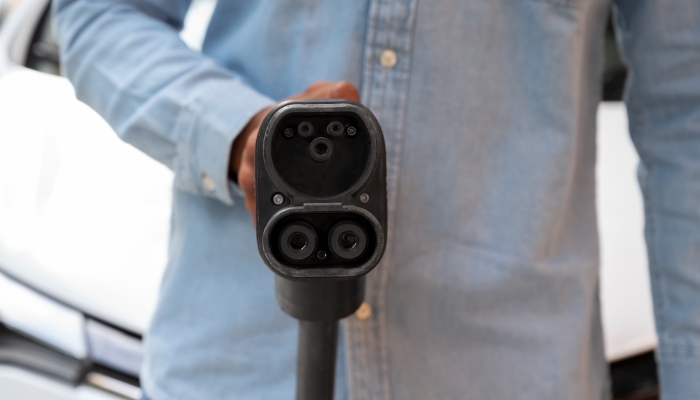
This combo format is now the default across Europe for new EVs. It helps manufacturers and drivers by using one port for all charging needs.
Conclusion
Type 2 4 and CCS might look alike, but they serve different roles. Type 2 is only for AC charging. CCS2 adds two DC pins to support fast charging. You can use a Type 2 plug in a CCS port—but not the other way around. Tesla now uses CCS2 in Europe, and that’s becoming the new normal. Knowing these differences will help you charge faster, avoid mistakes, and plan better for every trip.
READ ON:
Do All Electric Cars Use the Same Charging Cable?
Type 1 vs Type 2 EV Charger Differences
Type 1 vs Type 2 EV Charger: Which is Best?
- Explore this resource to learn about the best fast-charging networks and how to maximize your EV charging experience.[↩]
- Explore this resource to learn effective home charging methods, ensuring your EV is ready without high costs.[↩]
- Understanding the car’s onboard converter is crucial for grasping how EVs manage charging, especially with AC and DC power.[↩]
- Understanding Type 2 charging is essential for efficient electric vehicle charging and avoiding compatibility issues.[↩]

