


If you’re paying too much to charge your EV or your charger always seems busy, it might just be about when you’re plugging in.
The best time to charge an EV is during off-peak hours—typically late at night to early morning—when electricity is cheapest and grid demand is low.

Most people don’t realize that the time you charge your EV can make a huge difference—on your wallet, your vehicle’s readiness, and even the power grid. Charging at the right time means you can cut costs, reduce strain on local energy systems, and get the most from renewable sources like solar. So when exactly is the right time? It depends on a few key factors.
What is the cheapest time of day to charge EV?
Electricity isn’t priced equally all day long—so why charge like it is?
The cheapest time to charge an EV is usually from 11:00 PM to 7:00 AM, when utility companies lower rates to reflect lower demand on the grid.
When the rest of the city is asleep, the grid breathes easier. Utility providers often reward night owls with lower electricity rates 1. These off-peak hours 2 are perfect for EV owners looking to save. I’ve seen rate plans where you can pay half—or even less—by simply charging after midnight 3. This adds up quickly over the month.
Let’s break it down.
| Time of Day | Grid Demand | Typical Rate Type | Cost Level |
|---|---|---|---|
| Midnight – 7 AM | Low | Off-Peak | Lowest |
| 7 AM – 12 PM | Moderate | Standard or Mid-Peak | Moderate |
| 12 PM – 4 PM | High (unless solar) | Peak or TOU | High or Variable |
| 4 PM – 9 PM | High | Peak | Highest |
| 9 PM – Midnight | Dropping | Mid-Peak or Off-Peak | Moderate |
Of course, each utility company has its own schedule. So it’s smart to check your provider’s time-of-use (TOU) plan. If you’re in a region like California, where PG&E runs the show, you’ll see the steepest differences between these windows.
What is peak time for EV charging?
If you’re charging when everyone else is, you’re doing it wrong—and paying more.
Peak time for EV charging is usually from 4 PM to 9 PM, when electricity demand across the grid is at its highest.
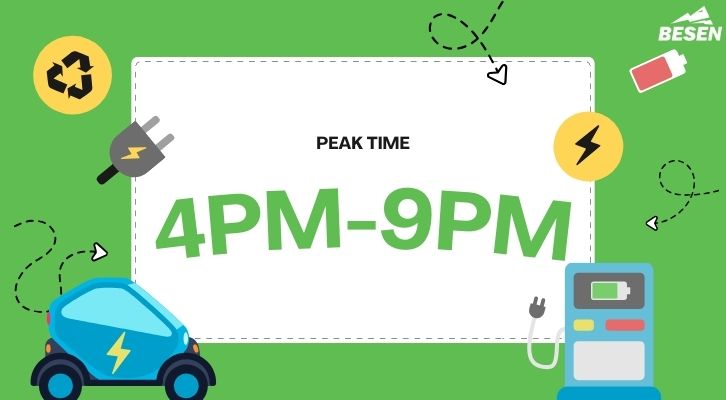
These evening hours might seem convenient—you’ve come home, plugged in, and gone about your night. But it’s also when your neighbors are cooking, running laundry, and turning on lights. That collective energy use 4 drives up rates and puts pressure on the grid. If you charge during this time, you’re not only paying more but also contributing to demand surges 5.
Grid operators often issue advisories during hot days or during supply shortages, and EV charging during peak hours 6 can trigger local blackouts or voltage drops. That’s why many utilities offer incentives to delay charging. Some even allow smart chargers 7 to automatically shift to off-peak times.
So if you want to help your wallet and your community, avoid this window.
Is it better to charge EV every night?
What feels like a good habit might be wasting energy—or even hurting your battery.
No, charging your EV every night isn’t always necessary. It’s better to charge based on your daily driving needs and keep the battery between 20% and 80% for longevity.
I get it—it feels safe to top up every night. But EVs aren’t smartphones. Their batteries are built to last years, but frequent full charges 8, especially up to 100%, can wear them out faster. Unless you’re driving 200+ kilometers a day, you probably don’t need a full charge nightly.
Instead, aim to charge when your battery drops below 30-40% 9, and unplug before it hits 100% unless you’re planning a long trip the next morning. Many home chargers can be set to stop at 80% automatically. This approach not only extends battery life but also lets you take advantage of low-cost charging windows 10 more effectively.
What is the best charging routine for EV?
Having no routine at all? That’s the problem.
The best EV charging routine is to charge two to three times per week during off-peak hours, ideally when the battery is between 30% and 80%.
A good routine balances cost, battery health 11, and your driving habits. I’ve found that sticking to a consistent schedule—say, Monday, Wednesday, and Friday nights—helps me avoid peak pricing and keeps the battery healthy. If I’m working from home, I might switch to midday charging with solar to save even more.
Charging routines vary depending on your charger speed, climate, and how much you drive. But one rule always holds true: less frequent, well-timed charges are better than daily, random ones.
| Charging Habit | Battery Impact | Cost Efficiency | Ideal For |
|---|---|---|---|
| Daily Full Charges | Higher wear | Expensive | Long daily commuters |
| Every 2-3 Days | Balanced | Cost-effective | Moderate usage |
| Solar Midday Charging | Very low wear | Free/Low | Homeowners with solar |
| Peak Time Charging | High wear | Costly | Should be avoided |
Is it OK to leave EV charging overnight?
Set it and forget it—but only if you’ve got the right setup.
Yes, it’s generally safe to leave your EV charging overnight, especially if you’re using a certified Level 2 charger with built-in safety features.

I often leave my EV plugged in while I sleep, and I’ve never had issues—but only because my charger is properly installed and my vehicle limits the charge to avoid overheating or overcharging. Modern EVs are designed with protections to pause or end charging once the battery is full.
Still, use a charger that meets certifications like CE, TUV, or UL. BESEN’s chargers, for instance, come with temperature monitoring 12, auto shutoff 13, and surge protection. If your charger has scheduling features, use them to start the charge at midnight and stop at 80% by 6 AM. That’s the sweet spot.
How can I reduce my EV charging time?
Hate waiting around? You’re not alone.
To reduce EV charging time, use a Level 2 charger, precondition your battery, avoid charging from 0%, and keep your battery between 20% and 80%.
Charging speed depends on both your charger and your EV’s onboard capacity. A standard Level 1 charger might take 12–20 hours for a full charge. But a Level 2 charger from BESEN cuts that time down to 4–6 hours depending on your EV model.
Another trick? Warm up or cool down your battery before charging, especially in extreme weather. Cold batteries charge slower. Also, avoid letting the battery drop too low—going from 0% to 100% takes far longer than topping up from 40% to 80%.
Lastly, schedule charging when your EV is idle for a long time. Set timers to charge during your sleep or work hours so you never have to wait around again.
Conclusion
Charging smart—off-peak, at the right levels, and with the right routine—saves money, protects your EV battery, and supports a stable power grid.
READ ON:
How To Charge A Tesla At Home: An Ultimate Guide
The Cost of Charging Electric Cars: A Comprehensive Breakdown
Smart EV Charging Explained: A Simple Guide
Green Charging Revolution: Achieving Sustainable EV Charging Infrastructure
- Exploring this link will help you understand how lower electricity rates can significantly reduce your monthly bills and benefit your budget.[↩]
- This resource will provide insights into off-peak hours and how they can lead to substantial savings on your energy costs.[↩]
- Discover how charging your EV during late-night hours can maximize savings and efficiency in your energy usage.[↩]
- Understanding energy use can help you manage costs and reduce demand on the grid.[↩]
- Exploring demand surges will provide insights into energy management and grid stability.[↩]
- This link will provide insights into how peak hours impact energy costs and the importance of managing energy consumption effectively.[↩]
- Learn about smart chargers and how they can help you charge your EV efficiently while saving on energy costs.[↩]
- Understanding the impact of frequent full charges can help you maximize your EV’s battery lifespan.[↩]
- Learning about optimal charging levels can significantly enhance your EV’s battery lifespan and efficiency.[↩]
- Exploring low-cost charging strategies can save you money and improve your EV’s overall efficiency.[↩]
- Learn about essential tips and practices to maintain battery health, ensuring longevity and efficiency for your electric vehicle.[↩]
- Understanding temperature monitoring can help you choose safer EV chargers that prevent overheating and ensure battery longevity.[↩]
- Learning about auto shutoff features can enhance your knowledge of EV safety and charging efficiency, ensuring your vehicle is protected.[↩]

